The 10 Best Fantasy Books on Undead
An expert-curated list of the 10 best fantasy books on undead, examining necromancy, undead empires, and why these stories endure.
REVIEWS
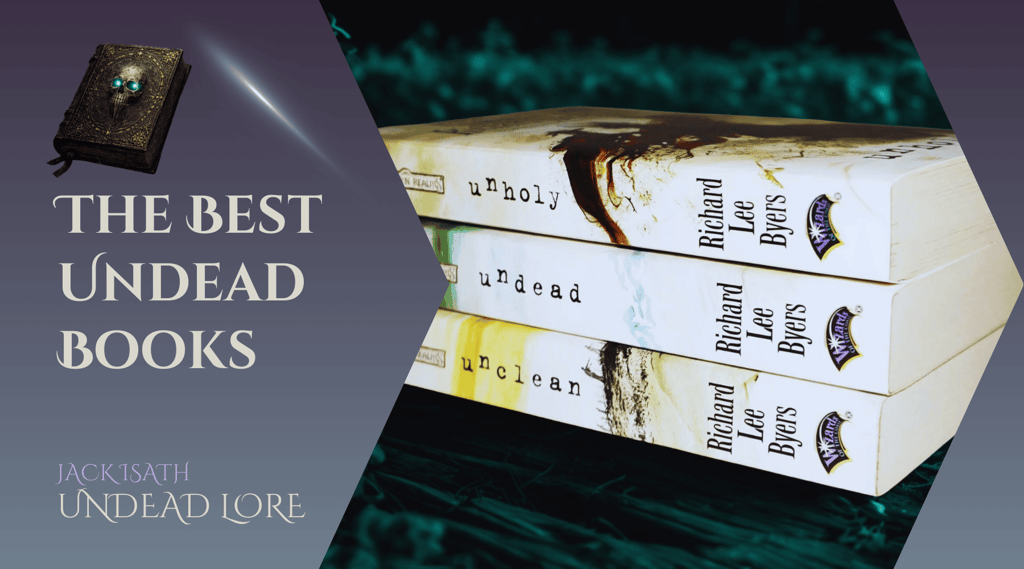
Fantasy literature treats the undead in several distinct ways. Some stories use undead as horror antagonists, defined by threat and revulsion. Others explore philosophical undead, where resurrection raises questions of identity, memory, and meaning. High fantasy often treats undeath as infrastructure, where necromancy underpins armies, religions, or empires. A smaller but deeply respected category focuses on necromancers themselves, portraying undeath as a discipline that requires restraint, sacrifice, and long-term consequence.
The books below endure because they do not use undead as decoration. Each one builds a coherent logic around death and what it means to interrupt it. That is why readers continue to recommend them years after release.
The Haunted Lands
by Richard Lee Byers
Buy on Amazon
My personal favorite, The Haunted Lands is set in a realm where necromancy has already reshaped society at a national level. Undead soldiers form the backbone of military power, while living citizens exist under an order that values efficiency, obedience, and control over morality. The narrative follows political figures, generals, and survivors navigating a world where death is no longer a limit but a resource.
What readers consistently respond to is how ordinary undeath becomes. The undead are not a looming apocalypse or an exotic threat. They are infrastructure. That shift allows the story to examine how fear replaces loyalty, how authority sustains itself without legitimacy, and how power rots even when it claims to create stability.
The series stands out because it does something rare in fantasy. It shows the aftermath of evil succeeding and then getting boring. Fans often describe it as one of the only undead stories that treats necromancy as governance rather than villainy, which makes its consequences feel far more real.
The Abhorsen Trilogy
by Garth Nix
Buy on Amazon
The Abhorsen trilogy expands on Sabriel by deepening the metaphysics of death itself. Rather than a single threshold, death becomes a vast and hostile environment that undead must be forced back through. Each book explores different failures of that system, showing how undead persist when boundaries erode.
One of the trilogy’s strengths is differentiation. Undead are defined by will, memory, and depth rather than raw power. Some retain fragments of identity. Others are little more than momentum. This creates moral and narrative tension without relying on spectacle.
Readers consistently praise the series for its internal consistency. The rules do not change to serve the plot. Instead, the plot emerges from those rules breaking down. That commitment is why the trilogy is often cited as one of the most coherent undead systems in fantasy.
The Bone Doll’s Twin
by Lynn Flewelling
Buy on Amazon
The Bone Doll’s Twin is a political fantasy where necromancy operates quietly beneath the surface. The undead elements are tied to secrecy, survival, and the preservation of a threatened bloodline. Rather than dominating the narrative, undeath lingers as an ever-present cost of protection.
The book avoids sensationalism. Necromantic acts are rare, deliberate, and often concealed. That restraint makes them feel heavier when they occur, as each use reinforces the sense that something unnatural is being held together by force of will.
Readers often describe the book as unsettling rather than frightening. Its reputation comes from how it treats undeath as a necessary compromise rather than a triumph. The undead exist not to conquer, but to prevent something worse, which gives the story lasting emotional weight.
I Am Legend
by Richard Matheson
Buy on Amazon
A classic, I Am Legend follows the last surviving human in a world transformed by vampiric infection. The undead are no longer isolated monsters but the foundation of a new society. The story focuses on isolation, adaptation, and the collapse of old moral frameworks.
What makes the book endure is its reversal of perspective. The undead are not framed as evil by default. Instead, they represent continuity, while the protagonist becomes increasingly an artifact of the past. That inversion forces readers to reconsider what survival actually means.
The novel is frequently praised for its conceptual clarity. Rather than escalating horror, it builds inevitability. Readers return to it because it reframes undead fiction as a story about transition and cultural extinction rather than heroism.
The Book of the New Sun
by Gene Wolfe
Buy on Amazon
This series takes place in a far-future world where death, resurrection, and decay coexist without explanation. Undead elements are woven into the setting rather than highlighted, making them feel alien and unresolved. Nothing about resurrection is comforting or clear, and returning from death rarely resembles restoration.
Rather than explaining its metaphysics, the series forces readers to infer meaning through repetition, omission, and contradiction. Death loses its finality, but identity does not survive intact. Resurrection often feels like erosion rather than renewal, as if something essential is always left behind.
What readers consistently admire is how undeath is never framed as a solution. It is present, functional, and culturally normalized, yet deeply unsettling. The undead are memorable precisely because they resist categorization, and many readers regard the series as one of the most intellectually demanding explorations of death in fantasy literature.
The Coldfire Trilogy
by C.S. Friedman
Buy on Amazon
The Coldfire Trilogy is set on a world where belief and fear actively shape reality. Undead creatures emerge not from ritual alone, but from collective emotional pressure. The more people fear monsters, the more real and powerful those monsters become.
This system reframes undeath as a shared responsibility. The undead are not simply the result of necromancers or dark gods, but of unmanaged human psychology amplified by the planet itself. Fear becomes a creative force, turning anxiety into infrastructure.
Readers consistently praise the trilogy for this feedback loop. Undeath is not treated as a moral aberration, but as a predictable outcome of social behavior left unchecked. The series is remembered because it makes fear itself complicit in sustaining the undead, rather than assigning blame to a single villain.
The Necromancer’s House
by Christopher Buehlman
Buy on Amazon
This novel follows a necromancer long past his rise to power, living with the accumulated consequences of decades of dark decisions. The story focuses on maintenance rather than conquest, on debts rather than ambition, and on what it means to keep dangerous systems from collapsing.
Undead forces exist largely in the background as obligations that cannot be escaped. Every alliance, ward, and binding carries history, and that history demands upkeep. The undead are not terrifying because of what they might do, but because of what they already require.
Readers value the book for its restraint and maturity. It is often recommended because it portrays necromancy as a long-term burden rather than a shortcut to power. Undeath here feels like responsibility ossified into permanence, which makes it unusually grounded and unsettling.
The Locked Tomb
by Tamsyn Muir
Buy on Amazon
The Locked Tomb presents necromancy as an academic and military discipline. Bone magic is studied, refined, and weaponized through rigid systems of training, hierarchy, and specialization. Undead bodies are treated as resources governed by expertise rather than instinct.
The series deliberately overwhelms the reader with terminology and structure, forcing active engagement. Emotional volatility exists alongside rigid systems, creating constant friction between control and collapse. Necromancy is powerful precisely because it is constrained.
Its popularity comes from that commitment. Readers continue to debate these books because they refuse simplification or moral clarity. The undead feel authored, institutional, and inseparable from the world’s power structures, which gives the series exceptional longevity in discussion spaces.
Empire of the Vampire
by Jay Kristoff
Buy on Amazon
This novel depicts a world in long decline under vampiric dominance. Immortality is presented as depletion rather than transcendence, slowly draining faith, culture, and meaning across generations. The undead do not conquer quickly; they endure until resistance erodes.
Vampires are not romanticized. They are ancient, exhausted, and destructive through persistence alone. Their presence reshapes the environment, turning survival into attrition and hope into a scarce resource.
Readers often praise the book for its atmospheric consistency. It stands out because undeath feels like environmental collapse rather than personal corruption. Vampirism is treated as a systemic failure that consumes the world by remaining, not by attacking.
The Nagash Trilogy
by Mike Lee
Buy on Amazon
Another favorite of mine, The Nagash Trilogy details the origin of necromancy within the Warhammer world through the rise and repeated collapse of Nagash himself. Set in ancient Nehekhara, the series follows how political ambition, religious authority, and obsession with immortality converge into a new and catastrophic form of power. Undeath here is not an accident or a curse, but a deliberate invention shaped through trial, failure, and persistence.
What makes the trilogy stand out is its focus on process rather than spectacle. Necromancy develops slowly through experimentation and loss, and the undead emerge as imperfect, unstable results before becoming scalable tools of control. Each defeat Nagash suffers reinforces the system rather than ending it, establishing undeath as something that adapts rather than resolves.
Readers consistently regard this series as essential because it explains why undead in Warhammer function as infrastructure, faith, and historical force. The books are valued not for heroics, but for showing how undeath becomes inevitable once death itself is treated as a resource to be mastered.
Koschei the Deathless
by Mike Mignola and Ben Stenbeck
Bonus Comic Book Option
Buy on Amazon
Koshchei the Deathless adapts a figure from Slavic folklore into a dark fantasy comic that centers on conditional immortality rather than conventional undeath. Koshchei cannot die in any normal sense. His mortality is externalized, hidden, and protected, turning death into a logistical problem instead of a physical one. The story focuses less on conquest and more on endurance, captivity, and the long consequences of refusing finality.
What makes the book stand out is how quietly it treats immortality. Koshchei is not portrayed as triumphant or godlike. He is ancient, constrained, and worn down by the mechanics of his own survival. Undeath here feels static and burdensome, defined by waiting, containment, and the inability to escape one’s own nature.
Readers often recommend this comic because it captures something rare in undead fiction: immortality as stasis rather than power. Visually restrained and thematically focused, Koshchei the Deathless works as a concise study of undeath as an unresolved condition, making it a strong supplemental entry alongside prose-heavy undead fantasy.
Why These Undead Stories Matter
The best fantasy books about undead succeed because they respect consequence. They define rules, enforce limits, and show what happens when death is interrupted repeatedly and at scale. These stories endure because undeath changes societies, not just battlefields.
This list exists to highlight undead fiction that treats death as a system worth understanding. For readers, writers, and worldbuilders alike, these books demonstrate why undead remain one of fantasy’s most powerful tools when handled with intention and restraint.
Some of these links are affiliate links and we will earn a small commission if you purchase. This helps support the Undead Lore website and the content we create. It costs you nothing extra when you buy. Thank you for your support.
Undead Lore Mission
Introduce Undead Lore as a scholarly exploration of death, undeath, necromancy, and their role in myth, media, games, and culture.
© 2026. All rights reserved. Created by Nectagrity LLC