The Meaning of Undeath in Fantasy Settings
Explore the meaning of undeath, where death fails to resolve, persistence replaces life, and the dead become systems of power.
PHILOSOPHY
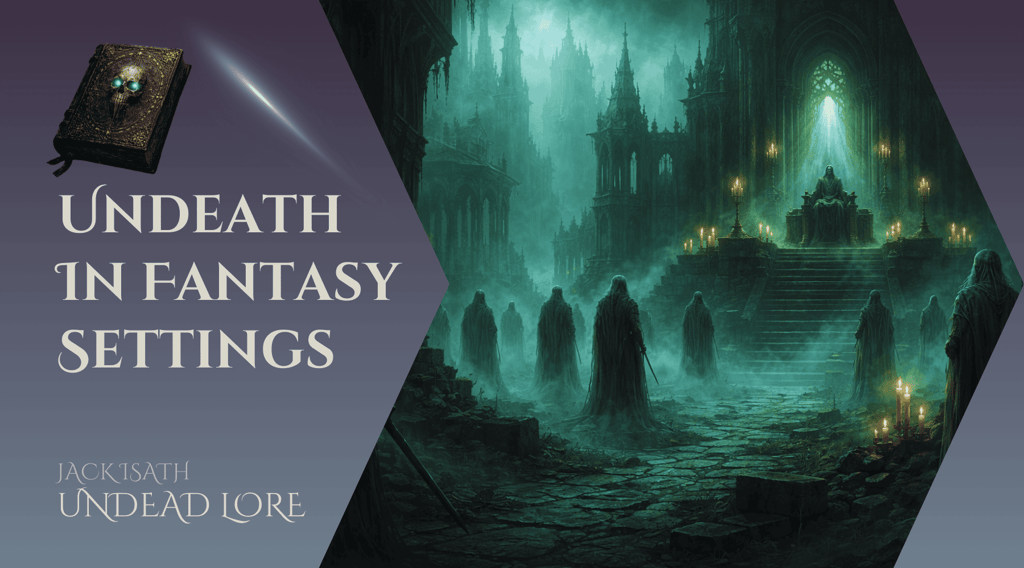
Fantasy and horror fiction frequently depict beings who are dead yet continue to act in the world. These undead figures are more than monsters; they are a narrative response to the problem that death ends life but does not end meaning. They allow stories to continue unresolved threads, memories, obligations and injustices, beyond the grave. In myths, games and media they carry what remains unsettled when life ends. This essay explores undeath as a state, a system and a consequence and deepens each section of the previous framework while keeping the language accessible to gamers, writers and filmmakers.
Undeath as a Condition of Failed Resolution
In many cultures and stories, death is expected to bring closure. It ends a person’s agency and provides social and moral finality. The undead arise when that closure fails. Narratives across history show that stories feel incomplete when a hero or villain dies and unresolved business remains. Undead beings like ghosts, revenants, vampires or zombies embody those loose threads. They linger because promises were broken, wrongs were unavenged or rituals were neglected. Even popular fiction often portrays undeath as a curse brought about by dark magic, defilement of graves or necromancy. These beings are not alive again; they exist in suspension until some injustice or duty is resolved.
Undeath is different from survival or resurrection because it suspends rather than completes. It is a state of failed resolution. A restless ghost may remain until its murder is avenged; a vampire may persist because improper burial allowed a “decomposing body” to become an unclean spirit. These examples show that undeath functions as a narrative mechanism for stories and settings to address unfinished business.
Undeath Defined by What Persists
Undead are defined not by animation alone but by what continues after death. Folklore and fantasy differentiate between corporeal and incorporeal forms: some undead maintain physical bodies while others exist as spirits. A zombie preserves motion without identity. A ghost retains emotion and memory without flesh. A lich binds its will and intellect to a phylactery, preserving mind and magical power while surrendering organic life. In other myths, draugr guard their graves, jiangshi hop between worlds, and vampires sustain their immortality through blood. Each form answers the question: what aspect of being refuses to dissolve?
This persistence often comes at a cost. In many stories, vampiric immortality requires continuous feeding and brings a loss of humanity, while zombies represent a form of undeath characterized by the loss of personhood. Powerful undead can act and think but cannot grow or change; they are anchored to the past. Exploring which facets, body, mind, soul, influence, remain active helps creators design varied undead types that feel distinct yet consistent within their worlds.
Undeath Requires an External Sustaining Logic
Life sustains itself through metabolism and growth. Undeath, by contrast, is maintained by outside systems. Folklore attributes undeath to curses, necromancy or violations of burial customs. Spirits are bound by unfulfilled oaths, and reanimated corpses are kept moving by spellcraft or parasitic forces. Fandom sources describe undeath as a curse brought about by dark magic, the defilement of graves, or the work of witches and necromancers. Even science fiction introduces technological analogues, such as cryonics or brain preservation, where machines replace life’s functions. In all cases, something replaces the natural cycle of birth, growth and decay.
The methods of sustaining undeath vary across fantasy settings:
Magical rituals or necromancy raise skeletons, zombies or liches. The spells provide the power that life no longer supplies.
Curses and divine punishment bind souls to bodies or locations, creating revenants or ghosts that cannot move on.
Parasitic or technological systems appear in science‑fantasy, where a virus, a parasite or a machine keeps a corpse functional.
Social or institutional systems in some worlds harness the undead as laborers or soldiers, using them as infrastructure. Designers in games often use undead creatures because they allow players to engage in combat without the ethical weight of killing the living.
Understanding the sustaining logic is essential for world building. It explains why the undead persist, what limits or vulnerabilities they have, and how they might finally be laid to rest.
Undeath as Existence Without Renewal
A key distinction between life and undeath is renewal. Living beings grow, heal and adapt. Undead beings persist without change. They may be immortal in the sense that they no longer age, but they are also stagnant. Myths and stories emphasize this by portraying vampires, liches and other undead as trapped in their habits. A vampiric immortality is conditional and maintained by feeding on blood. Liches and revenants are often portrayed as obsessive, bound to narrow purposes or locations. Zombies, meanwhile, exhibit endless motion without consciousness. Even when undead possess great power, they lose the capacity for growth or redemption. This stagnation can be used to contrast them with living characters, highlighting the value of change and adaptation.
In game mechanics, this trait can be reflected by giving undead creatures resistances and immunities but limiting their ability to improve. In narrative, it creates tension: a character who seeks immortality might become undead and discover that eternal existence is hollow. Writers and designers can use this theme to explore questions about the cost of evading death.
Undeath Externalizes Unresolved Meaning
Undeath is not merely a biological condition; it serves as a storytelling device to make unresolved meaning visible. The Undead Lore project notes that the undead carry memory, obligation, guilt, power and history after life has ended.
Memory without agency
Ghosts and specters embody memories or emotions that refuse to rest. They cannot act freely but remind the living of what was left undone.
Obligation without consent
Some undead continue duties involuntarily. Stories tell of soldiers bound to fight after death or brides trapped until a wrong is set right.
Power without life
Vampires, liches and similar beings enjoy abilities beyond human limits yet lose what makes life meaningful. Their immortality is thus portrayed as a curse.
Guilt without absolution
Ghost stories often revolve around guilt left unresolved. The undead ensure that wrongdoing or suffering remains an open wound.
History that cannot be buried
Undead may represent collective memory. Tales of draugr guarding graves, jiangshi wandering in search of life force, or zombies symbolizing the memory of slavery show that societies fear history’s return.
In each case, undeath forces the living to confront what they would rather forget. This makes undead characters powerful tools for exploring themes of justice, trauma and remembrance.
Undeath as a Systemic Choice
Although many undead are portrayed as the victims of curses or accidents, some settings depict undeath as a deliberate choice. Necromancers seeking power, rulers fearing death or societies needing tireless laborers may create undead intentionally. In some fantasy worlds, entire economies rely on skeleton workers or zombie armies. This shifts undeath from a personal affliction to an infrastructure. It raises questions about control and exploitation: is it ethical to bind the dead to endless service? Undead labor offers efficiency, as the creatures do not tire, dissent or reproduce, but it also removes agency and dignity. Designers of games often use this framework to create oppressive regimes or to illustrate the consequences of valuing control over life.
The Final Resting Place
In fantasy settings, undeath is more than a monster archetype. It is a concept that blends metaphysics, narrative and mechanics. Undeath arises when death fails to resolve meaning, persists through supernatural or technological systems, and endures without renewal. By asking what remains active after life ends and what sustains that activity, creators can design undead beings that feel coherent and purposeful. By recognizing undeath as a symbol of memory, obligation, guilt and history, they can use it to explore themes of justice, power and control.
Understanding the meaning of undeath enriches fantasy worlds. It allows writers, game designers and filmmakers to craft stories that confront the fear of oblivion and the desire for continuity. Undeath reminds us that endings matter and that what we leave unresolved may come back to haunt us.
Undead Lore Mission
Introduce Undead Lore as a scholarly exploration of death, undeath, necromancy, and their role in myth, media, games, and culture.
© 2026. All rights reserved. Created by Nectagrity LLC