Why Do People Believe in Ghosts?
Why do people believe in ghosts? Explore the emotional, cultural, and psychological reasons behind one of humanity’s oldest beliefs.
PHILOSOPHY
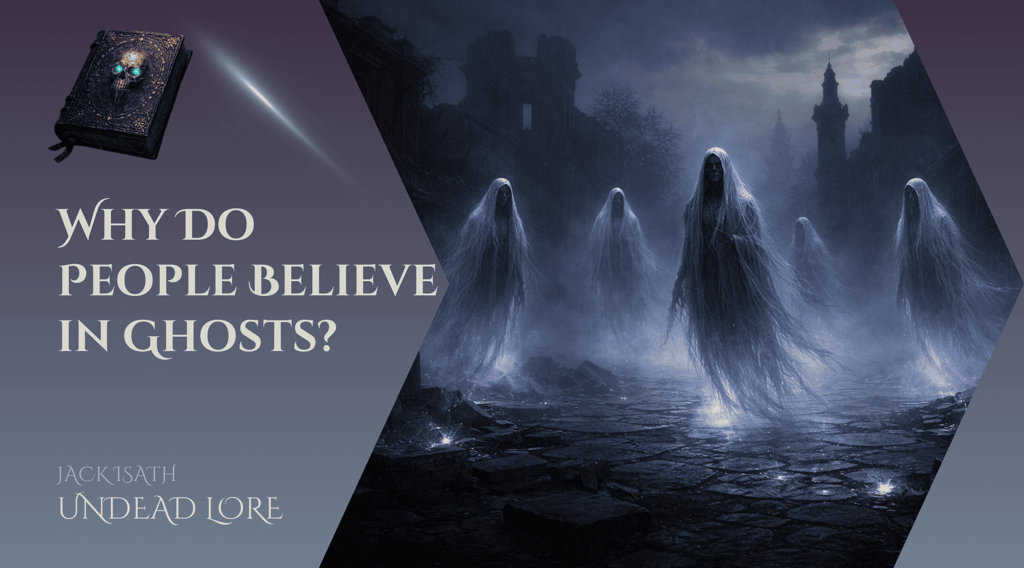
Belief in ghosts is a persistent phenomenon across cultures and eras. While individual experiences differ, the reasons behind ghost belief tend to fall into a handful of overlapping categories. Understanding these motives helps us see why ghost stories endure even in a scientific age.
Quick Answer: Why People Believe in Ghosts
People believe in ghosts for emotional, psychological, cultural, and experiential reasons. Grief often motivates people to seek continuity with lost loved ones.
The brain’s pattern detection and fear responses can misinterpret environmental cues, especially in uncertain or stressful conditions.
Stories passed down through religion, folklore, and media normalize ghosts, while social dynamics, personal experiences, and even opportunism sustain the idea.
Emotional and Psychological Factors
These reasons come from within. They reflect how humans process loss, fear, uncertainty, and memory. The ghost becomes a vessel for what can’t be resolved directly.
Grief and the Need for Continuity
After losing someone, many people report sensing or seeing the deceased. Psychologists note that “presence hallucinations” are common in bereavement and can comfort the bereaved, making them interpret these experiences as real contact.
Pattern and Agency Detection
Human brains evolved to detect patterns and assume agency. We sometimes perceive intention behind random events like a rustling curtain or a flickering light becomes evidence of a spirit.
Fear, Memory and Sleep States
Darkness and uncertainty heighten fear, while sleep paralysis and hypnagogic (half‑awake) experiences can produce vivid hallucinations. Memory is also reconstructive; stories often become more ghostly with each retelling.
Social and Cultural Influences
Ghosts don’t appear in a vacuum. Families, communities, religions, and media all shape how people interpret strange experiences or expect them.
Religion and Spirituality
Many religions teach that souls continue after death, making ghost belief consistent with doctrine. Ancestor veneration, saints’ apparitions and the concept of purgatory normalize the idea of spirits visiting the living.
Family, Folklore and Media
Ghost stories passed down in families and communities instil belief from childhood. Horror films, TV shows and ghost‑hunting programs train audiences to interpret ambiguous noises or images as supernatural.
Community and Identity
Sharing ghost stories can strengthen social bonds. Some people join paranormal groups or online forums and find validation in others’ experiences, which reinforces their own beliefs.
Interpretive Mistakes and Coincidences
Not every ghost story comes from belief. Many come from how perception, environment, and meaning-making go slightly off course.
Misreading the Environment
Old houses creak, faulty wiring generates electromagnetic fields, infrasound produces unease, and carbon‑monoxide leaks can induce hallucinations. Without technical knowledge, these effects may be attributed to ghosts.
Technology and False Positives
Dust near a camera lens becomes a glowing “orb”; random radio noise sounds like voices (EVP); and app‑generated overlays can insert fake spirits into photos. Ghost hunters often mistake such artifacts for evidence.
Coincidences and Wishful Thinking
Meaningful coincidences, like hearing a favorite song when thinking of a deceased loved one, eel intentional. Many interpret these events as signs or messages from spirits.
Motivated Beliefs and Opportunism
Some ghost stories aren’t errors or grief, they’re intentional. The motive may be comfort, clout, control, or money.
Desire for Mystery and Control
Ghosts reintroduce wonder into a world that may seem over‑explained. Believing can provide a sense of control in chaotic times, offering explanations for random misfortunes.
Fame, Fraud and Profit
Some people exploit ghost belief for money or attention. Hoaxers, unscrupulous mediums and viral pranksters create or exaggerate hauntings, and haunted‑tourism businesses keep legends alive.
Enjoyment and Entertainment
For many, believing in ghosts is simply fun. Ghost stories are thrilling, and some people actively seek paranormal experiences for the scare factor.
Are Ghost Beliefs Rational?
The article notes that ghost belief is rarely rooted in logic alone; it combines emotional comfort, cognitive biases, cultural training and sometimes deliberate deception. Yet dismissing ghosts outright can feel cold, especially when someone draws strength from the belief that a loved one’s presence persists. Skepticism is essential, but so is empathy for why these beliefs endure.
Frequently Asked Questions (FAQ)
Do ghosts exist?
There’s no scientific evidence for ghosts, but many people report consistent and vivid experiences that they interpret as ghostly.
Why do people think they saw a ghost?
Because perception is influenced by memory, emotion, light, suggestion, and expectation. What feels real may not be literal.
What is sleep paralysis and why does it feel paranormal?
It’s a temporary state where your body is frozen but your mind is semi-aware. Hallucinations of shadowy figures are common.
Why do haunted places feel convincing?
Low light, architectural oddity, sound distortion, and suggestion all prime the mind to expect fear and then experience it.
Why do EVP recordings sound like voices?
Humans are wired to find patterns in sound, especially voices. Static noise creates opportunities for false positives.
Are ghost sightings increasing because of social media?
Yes. Viral ghost content thrives on ambiguity and plays into the algorithms of platforms built for engagement.
Can grief cause someone to sense a loved one?
Yes. Bereavement hallucinations are common and psychologically normal, they can feel deeply comforting and real.
Why do skeptics and believers talk past each other?
Because they’re often not asking the same questions. One wants evidence; the other is speaking from experience.
Undead Lore Mission
Introduce Undead Lore as a scholarly exploration of death, undeath, necromancy, and their role in myth, media, games, and culture.
© 2026. All rights reserved. Created by Nectagrity LLC