
The Forsaken Undead Race of Warcraft
An encyclopedic overview of the Forsaken in Warcraft, exploring their undead origins, culture, leadership, and role as a sentient people.
LORE
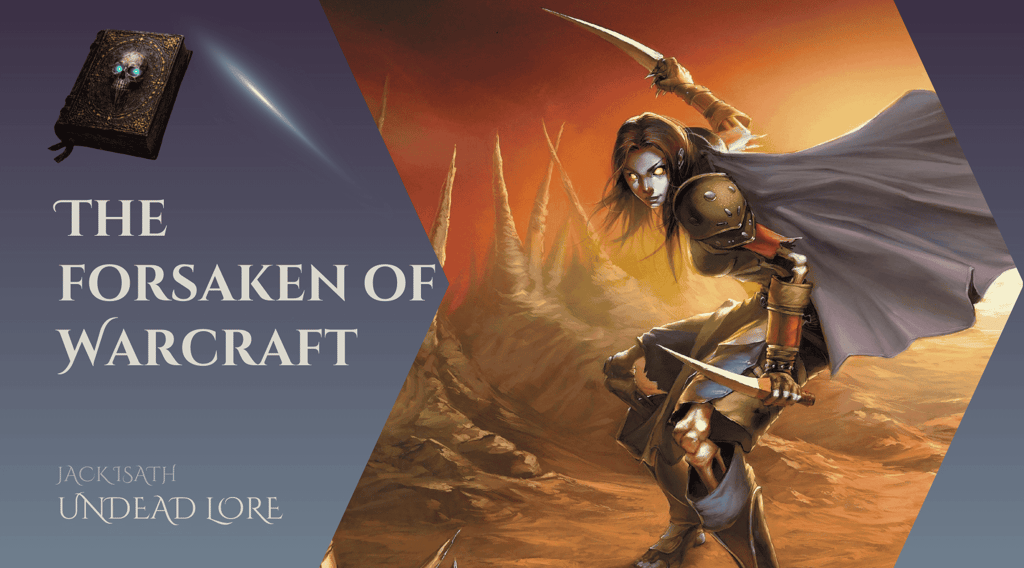
The Forsaken are a faction and playable undead people in World of Warcraft, composed primarily of former citizens of Lordaeron and other free-willed undead who broke from the Scourge. They are defined by retained identity and autonomy after necromantic domination, and they are historically associated with Sylvanas Windrunner the Banshee Queen, who led their early consolidation from the ruins of Lordaeron.
Origin and formation
The Forsaken emerged in the aftermath of the Third War, when a portion of the Scourge regained free will during a period of instability in the Lich King’s control. These newly autonomous undead gathered under Sylvanas Windrunner, who had been killed by Arthas Menethil and raised as a banshee, then later reclaimed her agency and body.
Early Forsaken identity formed around a shared condition rather than a shared culture inherited from life. They were undead who remembered who they had been, recognized what had been done to them, and refused reintegration into the living kingdoms that now treated them as an existential threat.
Over time, this collective condition hardened into a political faction centered in and beneath the ruins of Lordaeron’s former capital, commonly referred to in-game as the Undercity and the Ruins of Lordaeron.
Nature of Forsaken undeath
The Forsaken are distinguished from many other undead in Warcraft by continuity of mind. Their defining feature is not reanimation alone, but the persistence of memory, personality, and decision-making after death. Blizzard’s official race text frames them as undead who “broke free” from their master’s will and now struggle to endure in a world that despises them.
Forsaken bodies vary in condition, from recently risen corpses to heavily decayed forms. This physical reality influences their social structure and their relationships with the living. The faction’s internal cohesion historically relied on shared exclusion and shared vulnerability, rather than on traditional institutions like lineage, property, or faith.
A recurring structural constraint in Forsaken lore is reproduction and continuity. Forsaken numbers are not produced by birth; they depend on recruitment through raising the dead or the liberation of existing undead from control. This makes the faction’s long-term survival a political and logistical problem, not a demographic certainty.

Society and culture
Forsaken society developed as a post-mortem culture: practical, defensive, and shaped by the constant possibility of eradication. Their identity is frequently articulated through concepts of choice and ownership of the self, particularly because many Forsaken remember a period when their bodies and actions were not their own.
Culturally, the Forsaken are also defined by proximity to their own remains. They do not merely inhabit death-adjacent spaces; they live in the aftermath of their former lives and often among the ruins of the institutions that once defined them. This produces a faction culture grounded in continuity with the past but unwilling to be governed by it.
Governance and leadership
For much of World of Warcraft’s history, Forsaken governance was effectively centralized under Sylvanas Windrunner, styled “Dark Lady” and “Banshee Queen.” Her rule combined state-building with military necessity, and her legitimacy rested on her role as liberator, strategist, and symbol of autonomy from the Lich King.
After Sylvanas’s departure from the Horde and the subsequent destabilization of Forsaken political identity, Forsaken leadership is depicted shifting toward a collective structure known as the Desolate Council, associated with figures including Lilian Voss and Calia Menethil in later narrative developments.
Military and strategic function
Militarily, the Forsaken operate as an undead polity with asymmetric advantages and reputational liabilities. Their forces include conventional infantry, dark rangers, and apothecaries associated with chemical warfare research and deployment. In Warcraft’s narrative economy, this positions the Forsaken as a faction whose strategic leverage often comes from methods other factions publicly reject but privately fear.
A defining strategic reality is geographic: the Forsaken historically maintained a foothold in the Eastern Kingdoms anchored to Lordaeron. Major conflicts over this territory, including the Siege of Lordaeron period in Battle for Azeroth, reinforced the faction’s role as both a homeland claim and a political liability within broader Horde and Alliance conflict.
Relationship to other factions
The Forsaken’s relationships are shaped by three persistent pressures:
The living kingdoms often treat them as an unnatural continuation of enemy occupation, particularly in lands once ruled by humans.
The Horde historically functioned as pragmatic shelter and geopolitical cover, though this relationship repeatedly strained under questions of trust and methods.
Other undead powers, particularly Scourge-associated forces, remain an existential mirror. The Forsaken are undead defined by autonomy, and the Scourge are undead defined by imposed will.
The faction’s long-term story repeatedly returns to one theme: even when the Forsaken are politically aligned, they are rarely socially integrated.
Philosophical position on undeath
The Forsaken are not defined by a unified theology. They are defined by a shared condition that forces philosophy to become operational. Forsaken identity centers on questions of agency, continuity, and legitimacy: what a person is allowed to be after death, and whether the living possess moral authority to deny that existence.
In official fiction tied to Sylvanas and the Forsaken, undeath is framed as survival under constraint and as a negotiation with systems of power that extend beyond conventional politics. These texts emphasize the role of compacts, bargains, and structural dependence in how Forsaken leadership maintained continuity.
Major historical phases
Liberation and consolidation
The early Forsaken era is defined by separation from the Scourge, reclamation of physical space in Lordaeron, and construction of a sovereign identity under Sylvanas.
Horde alignment and instrumental survival
Forsaken alignment with the Horde is depicted primarily as strategic necessity rather than ideological match. This period frames the Forsaken as a faction whose survival depends on external alliance without guaranteeing internal security.
Global escalation and territorial fracture
During later expansions, the Forsaken become increasingly entangled in global conflict, culminating in events that place their homeland and legitimacy under direct challenge, including the Siege of Lordaeron context.
Post-Sylvanas governance transition
After Sylvanas’s removal from Horde leadership and the reshaping of Warcraft’s death cosmology in Shadowlands, Forsaken narrative emphasis shifts toward internal governance and identity reconstruction, represented by the Desolate Council concept in later lore.
Narrative function within Warcraft
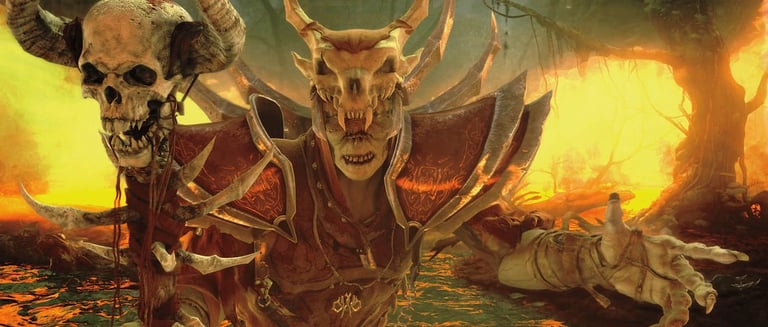
The Forsaken occupy a specific narrative role: they make undead autonomy legible inside a setting that otherwise treats undeath as invasion, plague, or domination. They also allow Warcraft to explore political identity after moral rupture. A Forsaken character can be sympathetic without being redeemable, and loyal without being trusted.
As a playable people, they convert a common undead premise into a civic structure: the undead as citizens with memory, grievance, and policy, rather than as monsters or disposable troops.
Lessons for creating a sentient undead people in other media
The Forsaken model is durable because it treats sentient undead as a social system with constraints, not as an aesthetic.
Make autonomy the defining trait, not decay
The Forsaken are memorable because free will is the axis that separates them from the larger undead threat. The body is secondary to the governance problem of “who decides.”
Give them a continuity problem
If they cannot reproduce normally, continuity becomes story. Recruitment, raising, ethics, and political legitimacy become survival mechanics instead of background lore.
Treat stigma as infrastructure
A sentient undead people need more than enemies. They need structural exclusion that shapes diplomacy, housing, trade, and internal cohesion. The Forsaken are built around living rejection as a constant condition, not a single plot beat.
Avoid moral simplicity by anchoring motives in survival
Warcraft repeatedly frames Forsaken behavior as emerging from constraint, fear, and long memory, even when their actions become politically indefensible. This sustains complexity without requiring constant justification.
Separate the people from the leader
The Forsaken remain usable as a concept because the setting can reframe their governance after Sylvanas, allowing the faction to persist as a people rather than collapsing into a single character’s arc.
Undead Lore Mission
Introduce Undead Lore as a scholarly exploration of death, undeath, necromancy, and their role in myth, media, games, and culture.
© 2026. All rights reserved. Created by Nectagrity LLC