Sylvanas Windrunner, the Banshee Queen
An encyclopedic biography of Sylvanas Windrunner, tracing her death, rise as the Banshee Queen, rule of the Forsaken, and downfall.
CHARACTERS
Full name and titles
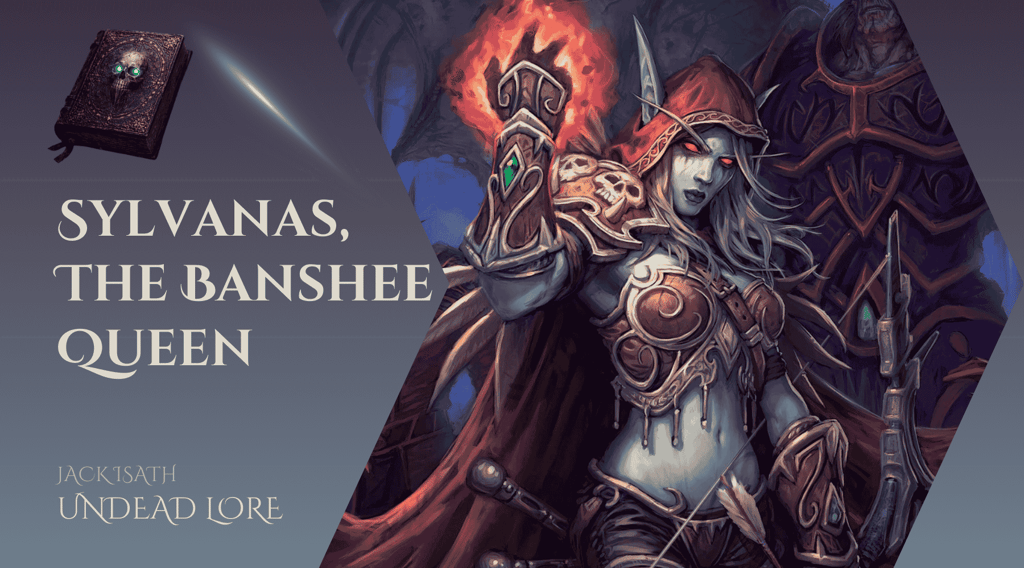
Sylvanas Windrunner, Ranger-General of Silvermoon; Dark Ranger; Queen of the Forsaken; The Banshee Queen; Warchief of the Horde.
Origin and setting
Sylvanas Windrunner originates from Azeroth within the Warcraft setting. Her narrative spans Warcraft III, World of Warcraft, and culminates during the Shadowlands expansion.
Affiliations
Kingdom of Quel'Thalas
The Horde (former Warchief)
Ontological status
Undead. Sylvanas exists as a banshee bound to her own corpse, retaining memory, identity, and agency following death.
Defining canonical events
Death and transformation into a banshee by Arthas Menethil, liberation from the Lich King’s control, founding of the Forsaken, reign as Banshee Queen, appointment as Warchief, burning of Teldrassil, confrontation with Bolvar Fordragon, and imprisonment following the events of Shadowlands.
The Story as It Unfolds
Sylvanas Windrunner is first depicted as the Ranger-General of Silvermoon, the supreme military commander of the high elven kingdom of Quel’Thalas. Canon sources portray her as disciplined, pragmatic, and deeply protective of her people. During the Third War, Sylvanas leads the defense of Quel’Thalas against the Scourge invasion commanded by Arthas Menethil.
Despite sustained resistance, Quel’Thalas falls. Sylvanas is slain by Arthas Menethil and subsequently raised as a banshee. Rather than granting her oblivion, Arthas deliberately preserves her consciousness, binding her spirit to undeath as a means of punishment. This act establishes Sylvanas’s arc as one rooted in enforced survival rather than a chosen transformation.
As the Lich King’s control weakens following Arthas’s temporary dormancy, Sylvanas regains autonomy along with other free-willed undead. She leads a rebellion against the Scourge remnants in Lordaeron, reclaiming the Undercity and declaring herself queen of the Forsaken. This faction consists of undead who retain memory and identity but are rejected by both the living and the Scourge.
Sylvanas aligns the Forsaken with the Horde, not through ideological alignment but strategic necessity. Her early rule is defined by consolidation, survival, and the pursuit of security for her people within a world hostile to their existence.

Philosophy and Motivation
Sylvanas’s philosophy evolves across distinct phases but remains anchored in the rejection of imposed fate. Her initial motivations are defined by vengeance against Arthas and the Lich King. Following Arthas’s defeat, her worldview shifts toward existential defiance.
Canon sources depict Sylvanas as acutely aware of the metaphysical consequences of undeath. Following her suicide at Icecrown Citadel after Arthas’s fall, she experiences a vision of annihilation and torment awaiting her soul. This event fundamentally reshapes her priorities. Survival becomes secondary to liberation from what she perceives as a rigged cosmological system governing life and death.
From this point onward, Sylvanas’s actions are oriented toward dismantling systems of control rather than securing territory or legacy.
The Nature of Her Undeath
Sylvanas exists as a banshee bound to her preserved body. Unlike mindless undead or necromantically dominated servants, she retains full agency, memory, and emotional capacity. Her undeath amplifies traits already present in life: resolve, strategic focus, and emotional restraint.
Canon depictions emphasize that Sylvanas’s undeath is experienced as continuity rather than corruption. What changes is not identity, but circumstance. Pain, loss, and alienation are persistent features of her existence, shaping her long-term decisions.
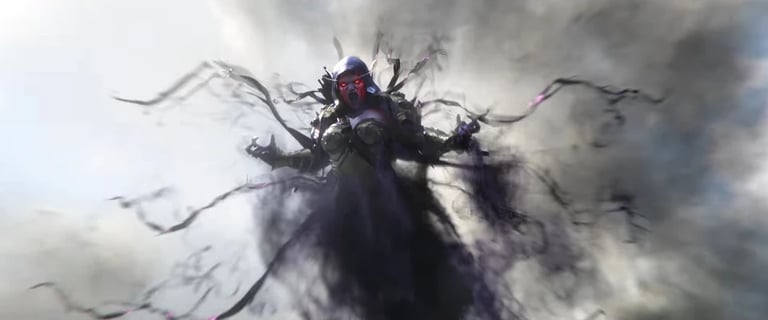
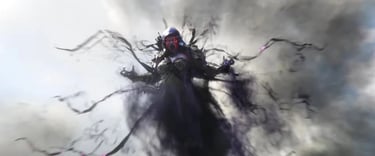
Her form allows for abilities associated with banshees and dark rangers, including spectral movement, shadow-based combat, and enhanced resilience.
Queen of the Forsaken
As ruler of the Forsaken, Sylvanas establishes a society defined by autonomy rather than redemption. The Forsaken are not presented as victims seeking restoration, but as survivors constructing purpose after death.
Her governance emphasizes secrecy, preemptive defense, and deterrence. Ethical boundaries surrounding necromancy, biological weapons, and coercion are treated pragmatically rather than ideologically. Canon material consistently frames these choices as survival-driven, though increasingly detached from conventional moral frameworks.
Warchief of the Horde
Sylvanas is appointed Warchief of the Horde following the defeat of the Burning Legion. In this role, her priorities expand from Forsaken survival to systemic disruption on a global scale.
The burning of Teldrassil marks a decisive escalation. Canon sources present this act not as strategic necessity, but as ideological declaration. By inflicting irreversible loss, Sylvanas seeks to expose what she perceives as the hypocrisy and cruelty of existing power structures.
Her leadership increasingly isolates the Horde, culminating in internal rebellion and her abandonment of the faction.
Confrontation with the Lich King
Sylvanas’s confrontation with Bolvar Fordragon at Icecrown Citadel represents the symbolic culmination of her undead arc. By defeating Bolvar and destroying the Helm of Domination, she dismantles the final centralized authority governing undeath on Azeroth.
This act is framed not as conquest, but as negation. The Lich King system, which once defined her existence, is rendered obsolete.
Shadowlands and Downfall
Sylvanas’s actions lead directly to the rupture between Azeroth and the Shadowlands. Canon material reveals her alliance with forces seeking to rewrite the structure of death itself. Her motivations during this period are presented as consistent with her long-standing rejection of imposed destiny, though increasingly detached from the consequences imposed on others.
Ultimately, Sylvanas rejects her alliance and submits to judgment. Rather than execution or redemption, her fate is imprisonment and atonement within the Shadowlands, tasked with recovering souls unjustly condemned.
What This Character Communicates
Sylvanas Windrunner embodies undeath as endurance rather than domination. Her arc reframes the undead not as monsters or rulers, but as witnesses to systemic injustice who refuse erasure.
Unlike Arthas Menethil, who seeks control, or Bolvar Fordragon, who accepts burden, Sylvanas seeks abolition. Her story interrogates whether survival within a corrupt system is itself complicity.
Legacy
Sylvanas Windrunner remains one of Warcraft’s most debated figures. Her narrative spans heroism, victimhood, tyranny, and defiance without settling into a singular moral category.
Within undead lore, she represents the final progression of agency: an undead being who neither submits to domination nor accepts stewardship, but instead attempts to dismantle the structures that define death itself.
Her story closes not with resolution, but with consequence, reinforcing undeath as continuity without absolution.
Undead Lore Mission
Introduce Undead Lore as a scholarly exploration of death, undeath, necromancy, and their role in myth, media, games, and culture.
© 2026. All rights reserved. Created by Nectagrity LLC